
Mauli Multispeciality Clinic
Shop No. 1, Tara Banglow, Near Shri Sai Shyam Mandir, Hendre Pada, Badlapur West, Maharashtra 421503
Call Us
(+91) 9225128191
Email Us
dravinashbhise@gmail.com
(+91) 9225128191
dravinashbhise@gmail.com
Lipoma Excision
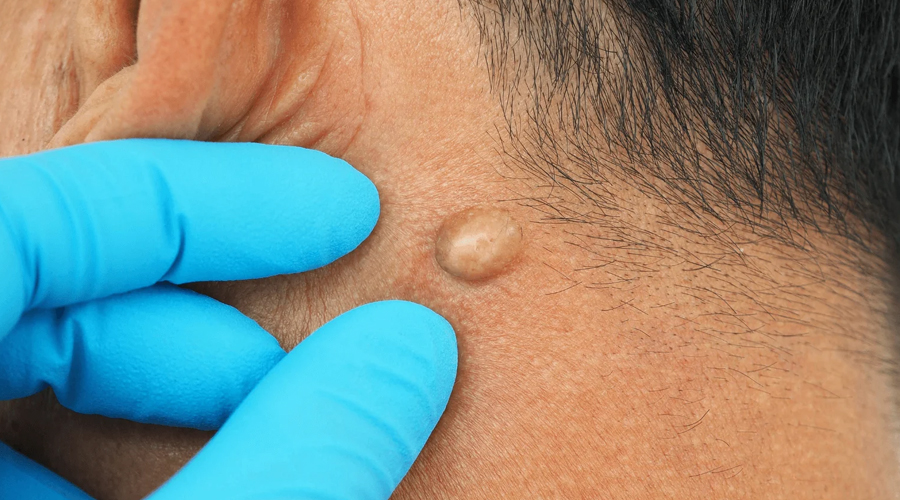
Lipoma Excision
A lipoma is a slow-growing, benign lump of fatty tissue that forms just beneath the skin. Lipomas are generally soft, movable, and painless. While they are not dangerous, surgical excision is recommended when the lipoma is large, painful, growing rapidly, or causing cosmetic concern.
When Is Lipoma Excision Recommended?
The lipoma is large (typically greater than 5 cm).
It is causing pain or tenderness.
It is growing rapidly.
It is affecting movement or pressing on nearby nerves.
It is causing cosmetic concern or discomfort.
There is uncertainty about the nature of the lump and a biopsy is needed.
How Is the Procedure Performed?
Lipoma excision is a minor surgical procedure performed under local anaesthesia as a day-care procedure.
Anaesthesia: Local anaesthetic is injected to numb the area completely.
Incision: A small incision is made over the lipoma.
Excision: The lipoma is carefully dissected and removed in its entirety.
Closure: The wound is sutured in layers and dressed.
Histopathology: The excised tissue is sent for laboratory examination.
Benefits of Surgical Excision
Complete removal reduces the risk of recurrence significantly.
Quick procedure with minimal downtime.
Relieves discomfort, pressure, and cosmetic concerns.
Provides tissue for histological analysis to confirm the diagnosis.
Recovery After Lipoma Excision
Most patients can resume normal activities within a day or two.
Keep the wound clean and dry as per the surgeon's instructions.
Sutures are usually removed after 7–10 days depending on the site.
Avoid strenuous activity or heavy lifting until the wound heals.
Some bruising and swelling around the site is normal and will settle.
Contact your doctor if you notice increasing swelling, redness, discharge, or fever after the procedure.