
Mauli Multispeciality Clinic
Shop No. 1, Tara Banglow, Near Shri Sai Shyam Mandir, Hendre Pada, Badlapur West, Maharashtra 421503
Call Us
(+91) 9225128191
Email Us
dravinashbhise@gmail.com
(+91) 9225128191
dravinashbhise@gmail.com
Diabetic Foot & Wound Management
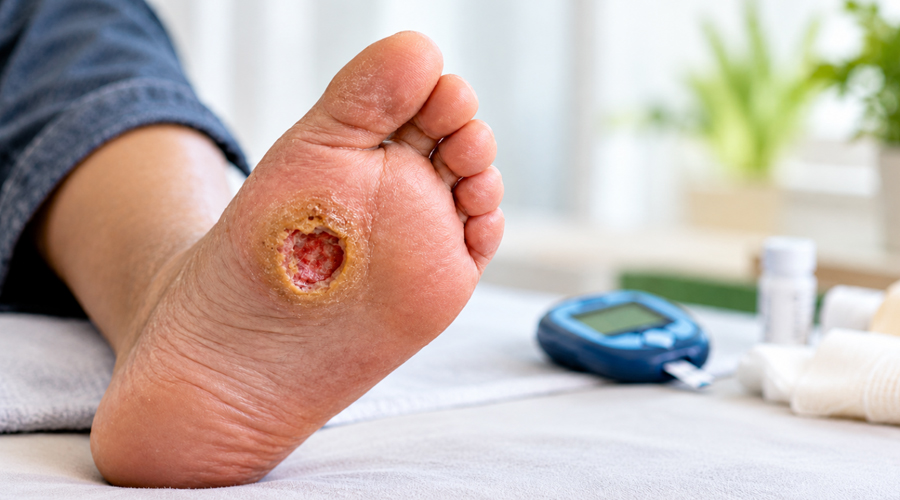
Diabetic Foot & Wound Management
Diabetic foot complications arise due to nerve damage (neuropathy) and poor blood circulation (peripheral arterial disease) caused by prolonged high blood sugar levels. Even minor injuries can develop into serious non-healing wounds, infections, or ulcers requiring expert management to prevent amputation.
Warning Signs to Watch For
Any wound, cut, blister, or sore on the foot that is slow to heal.
Numbness, tingling, or burning sensation in the feet.
Redness, warmth, or swelling around a wound.
Discharge of pus or foul-smelling fluid from a wound.
Darkening or blackening of the skin around a wound.
Calluses, corns, or cracked skin on the feet.
Ingrown toenails or fungal nail infections.
Important: Diabetic patients should inspect their feet daily. Any wound that does not show signs of improvement within a few days requires urgent medical evaluation.
Our Approach to Diabetic Foot & Wound Care
Thorough wound assessment: Evaluation of wound depth, extent, signs of infection, and blood supply to the foot.
Wound debridement: Careful removal of dead, damaged, or infected tissue to promote healthy healing.
Infection management: Appropriate antibiotics and, where necessary, surgical drainage of infected areas.
Advanced wound dressings: Use of specialised dressings to maintain a moist healing environment and protect the wound.
Offloading: Relieving pressure from the affected foot using specialised footwear, casts, or insoles.
Blood sugar control coordination: Liaison with your diabetes care team to optimise blood glucose levels for better wound healing.
Surgical intervention: Where necessary, surgical procedures to remove infected bone, drain abscesses, or reconstruct tissue.
Prevention of Diabetic Foot Complications
Maintain good blood sugar control as advised by your doctor.
Inspect your feet every day for cuts, blisters, redness, or swelling.
Wash and dry feet thoroughly, especially between the toes.
Wear well-fitting, comfortable footwear and avoid walking barefoot.
Trim toenails straight across and avoid cutting the corners.
Never attempt to self-treat corns, calluses, or ingrown nails at home.
Attend regular foot check-ups as part of your diabetes care.
Early professional intervention is key to preventing serious complications. Do not delay seeking care for any foot wound or sore.