
Mauli Multispeciality Clinic
Shop No. 1, Tara Banglow, Near Shri Sai Shyam Mandir, Hendre Pada, Badlapur West, Maharashtra 421503
Call Us
(+91) 9225128191
Email Us
dravinashbhise@gmail.com
(+91) 9225128191
dravinashbhise@gmail.com
Corn Excision
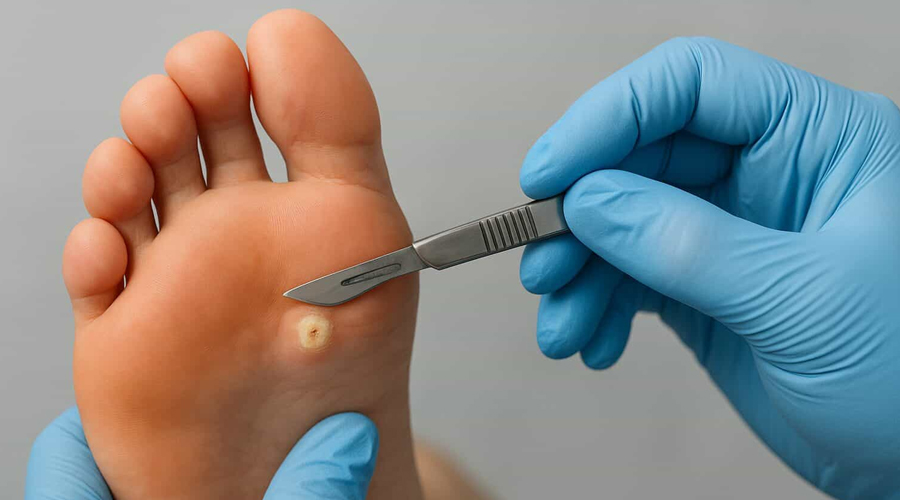
Corn Excision
Corns are thickened, hardened areas of skin that develop as a protective response to repeated friction or pressure, most commonly on the feet and toes. While conservative measures help in mild cases, painful or persistent corns often require professional excision for lasting relief.
Symptoms of Corns
A thick, rough, hardened area of skin on the foot or toes.
A raised, hardened bump — hard corns typically have a dense central core.
Pain or tenderness under the skin, especially when walking or with pressure.
Soft, whitish corns that develop between the toes due to moisture.
Flaky or dry skin at the affected site.
Important: Diabetic patients should never attempt to self-treat corns. Always seek professional care to avoid complications.
How Is Corn Excision Performed?
Corn excision is a minor procedure performed under local anaesthesia.
Assessment: The corn and surrounding tissue are carefully evaluated.
Anaesthesia: Local anaesthetic is administered for a comfortable, pain-free procedure.
Excision: The corn, including its central core and root, is precisely removed to prevent recurrence.
Dressing: A protective dressing is applied to the treated area.
Prevention of Corn Recurrence
Wear well-fitting, comfortable footwear that does not create pressure points.
Use cushioned insoles or padding where appropriate.
Keep feet clean, moisturised, and free from excessive callus build-up.
Address any underlying foot deformities (e.g., hammer toe) that may cause friction.
Recovery After Corn Excision
Keep the treated area clean and dry as directed.
Wear protective footwear as advised during healing.
Avoid prolonged walking or standing in the immediate post-procedure period.
Apply prescribed ointment if recommended.
Follow up with your doctor if the area becomes red, swollen, or painful.