
Mauli Multispeciality Clinic
Shop No. 1, Tara Banglow, Near Shri Sai Shyam Mandir, Hendre Pada, Badlapur West, Maharashtra 421503
Call Us
(+91) 9225128191
Email Us
dravinashbhise@gmail.com
(+91) 9225128191
dravinashbhise@gmail.com
Cyst Excision
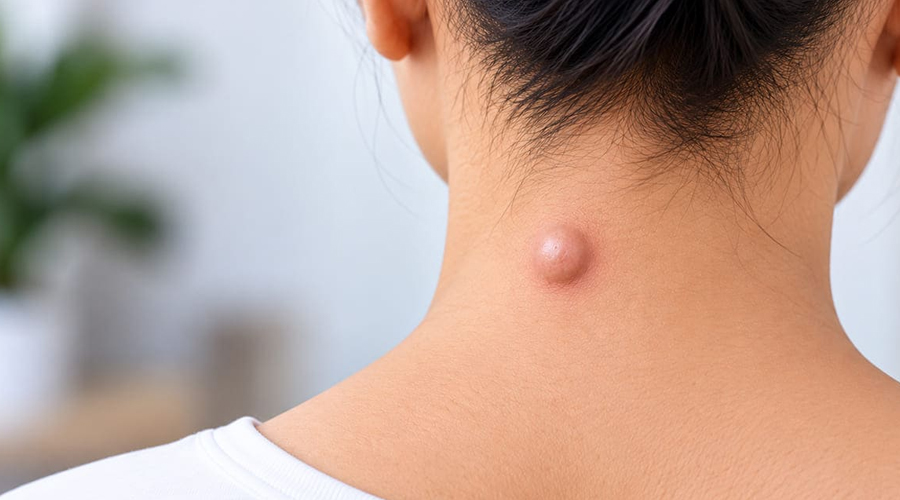
Cyst Excision
A cyst is a closed, sac-like pocket of tissue filled with fluid, pus, or other material. Common types include sebaceous (epidermoid) cysts, dermoid cysts, and ganglion cysts. While many cysts are harmless, they may be removed if they cause pain, become infected, grow rapidly, or for cosmetic reasons.
When Is Cyst Excision Recommended?
The cyst is causing pain, tenderness, or discomfort.
The cyst has become infected or is repeatedly getting infected.
The cyst is growing in size.
The cyst is affecting function or movement.
The patient wishes to have it removed for cosmetic reasons.
There is uncertainty about the nature of the lump and a biopsy is required.
How Is the Procedure Performed?
Cyst excision is a minor surgical procedure performed under local anaesthesia in an outpatient setting.
Anaesthesia: Local anaesthetic is injected around the cyst to numb the area.
Incision: A small incision is made directly over the cyst.
Excision: The entire cyst, including its wall (capsule), is carefully removed to prevent recurrence.
Closure: The wound is closed with sutures and dressed.
Histopathology: The removed tissue is usually sent for examination to confirm the diagnosis.
Benefits of Complete Excision
Complete removal of the cyst and its wall reduces the risk of recurrence.
Quick procedure with minimal downtime.
Relieves pain, discomfort, and recurrent infections.
Provides a tissue sample for laboratory analysis if needed.
Recovery After Cyst Excision
Most patients return home immediately after the procedure.
Keep the wound clean and dry as instructed.
Sutures are typically removed after 7–10 days.
Take prescribed pain relief and antibiotics if recommended.
Avoid strenuous activity until the wound has healed.
Seek medical advice if the wound becomes red, swollen, or discharges fluid after the procedure.