
Mauli Multispeciality Clinic
Shop No. 1, Tara Banglow, Near Shri Sai Shyam Mandir, Hendre Pada, Badlapur West, Maharashtra 421503
Call Us
(+91) 9225128191
Email Us
dravinashbhise@gmail.com
(+91) 9225128191
dravinashbhise@gmail.com
Laparoscopic Appendectomy
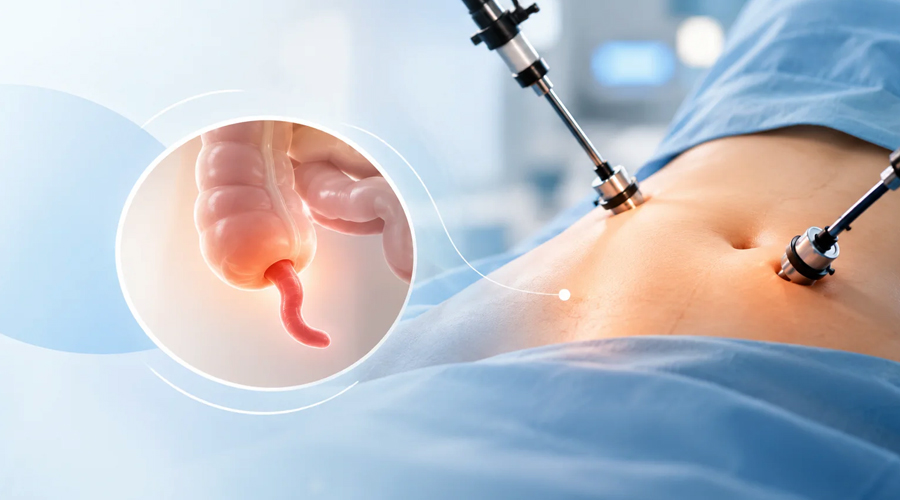
Laparoscopic Appendectomy
Laparoscopic appendectomy is a minimally invasive surgical procedure to remove an inflamed or infected appendix. It is the standard treatment for appendicitis and is performed through small incisions using a laparoscope and specialised instruments.
Symptoms of Appendicitis
Sudden pain that begins around the navel and shifts to the lower right abdomen.
Pain that worsens with movement, deep breaths, coughing, or sneezing.
Nausea and vomiting.
Loss of appetite.
Low-grade fever that may worsen as the illness progresses.
Bloating and inability to pass gas.
Important: Appendicitis is a medical emergency. If you experience sudden severe abdominal pain, seek immediate medical attention.
How Is the Procedure Performed?
The surgery is performed under general anaesthesia.
Preoperative assessment: Blood tests, imaging (ultrasound or CT scan), and clinical evaluation confirm the diagnosis.
Small incisions: Three small cuts are made in the abdomen to insert the laparoscope and surgical tools.
Appendix removal: The appendix is carefully isolated and removed through one of the incisions.
Closure: The incisions are closed with sutures or surgical glue and dressed appropriately.
Benefits of Laparoscopic Approach
Smaller incisions and reduced scarring.
Less postoperative pain compared to open surgery.
Shorter hospital stay.
Faster recovery and return to normal activities.
Lower risk of wound infection.
Recovery After Laparoscopic Appendectomy
Most patients are discharged within one to two days after surgery.
Follow all wound-care and medication instructions from your surgeon.
Begin light walking as advised to aid recovery.
Avoid strenuous activity and heavy lifting for the recommended period.
Eat light, easily digestible meals initially and gradually return to a normal diet.
Attend all follow-up appointments.
Contact your doctor immediately if you develop fever, worsening abdominal pain, redness or discharge from the wound, or persistent vomiting.